It's 3:47 PM. You had lunch. You are not, by any honest measure, hungry. And yet somehow the biscuits happened — not one, the way you planned, but a slow parade of them — and the verdict you hand yourself is always the same: no willpower. No control.
Before you convict yourself, look at the curve.
The spike, the crash, the reaching
Eat something sugary or starchy on a light or empty stomach — the afternoon biscuit, the sweet coffee, the "just a handful" of something — and your blood glucose climbs fast. Your body answers with insulin to clear that glucose away. And the clear-out often overshoots: glucose dips, and the dip arrives dressed as hunger. Low energy. Irritability. A very specific craving for the exact thing that caused it.
So you reach again. Spike, crash, reach, spike.
Notice what isn't in that loop: a character flaw. This is the pattern glucose researchers describe again and again — a steep rise, a reactive dip, and an appetite that switches back on far sooner than the food you ate can explain. The person who "can't stop at one" at 4 PM is frequently the same person who has no trouble at all at 10 AM. Same person. Same willpower. Different curve.
Every morning, you start fresh
Here's the first rule of this system, and it's the hopeful one:
Nothing about yesterday's curve follows you into today except what you repeat. The slate is genuinely clean. And the second half of that rule is the practical key: when you eat sugar matters as much as how much.
A dessert after dinner behaves differently from candy at 4 PM, for three reasons:
- It lands on top of a real meal. Protein, fat and fibre slow the rise, so the peak is flatter and the dip is gentler than sugar alone on an empty stomach.
- It's the last stop of the day. If a mild dip comes afterwards, you sleep through it instead of snacking your way through it.
- It's planned. A decision you made once, calmly — not a surrender negotiated at your weakest hour.
Sugar is not the enemy. Timing is.
Most diet advice fails on one dishonest line: "just have one." Sugar is not the enemy — sugar is delicious. It was refined by nature and perfected by food companies to be almost impossible to stop mid-stream, and for most humans, most days, "just one" is a fantasy.
So don't fight it at 4 PM on an empty stomach, at the exact moment the rollercoaster is driving. Schedule it instead:
Have your sugar after dinner. Log it like everything else. End the day inside your calories.
Do that, and here is the part the diet industry hopes you never learn: sugar has done nothing to your progress. Your 7-day average will not even notice it. The maths doesn't care that Tuesday included dessert. It cares what the week added up to.
Eat anything. Just not everything.
The tip — yum per calorie
Nobody talks about the only food ratio that actually matters day to day: yum per calorie.
Liquid sugar is the worst deal in the grocery store. A can of cola is roughly 140 calories, gone in three minutes, spike included. Three minutes of yum.
Now compare a popsicle. A Chapman's Li'l Lolly is 35 calories — and because it's frozen, it gives you ten minutes or more of actual eating pleasure. A quarter of the calories. Three times the duration. And slipped in after dinner, it fits inside almost any day's numbers without a negotiation.
When the sweet tooth shows up, don't reach for the fastest sugar. Reach for the slowest.
Your willpower was never the problem. Your timing was. Move the sugar, keep the maths.
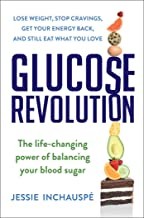
Glucose Revolution by Jessie Inchauspé — the book-length version of the spike-and-crash curve, from our recommended books.
General information, not medical advice. If you have diabetes or pre-diabetes, or you take insulin or glucose-lowering medication, blood-sugar management is a medical topic — talk to your doctor.
Disclosure: some book links on this site are affiliate links. If you buy through them, Trendline Fit may earn a small commission at no extra cost to you. It never changes what gets recommended — only books and tools the system actually stands behind.